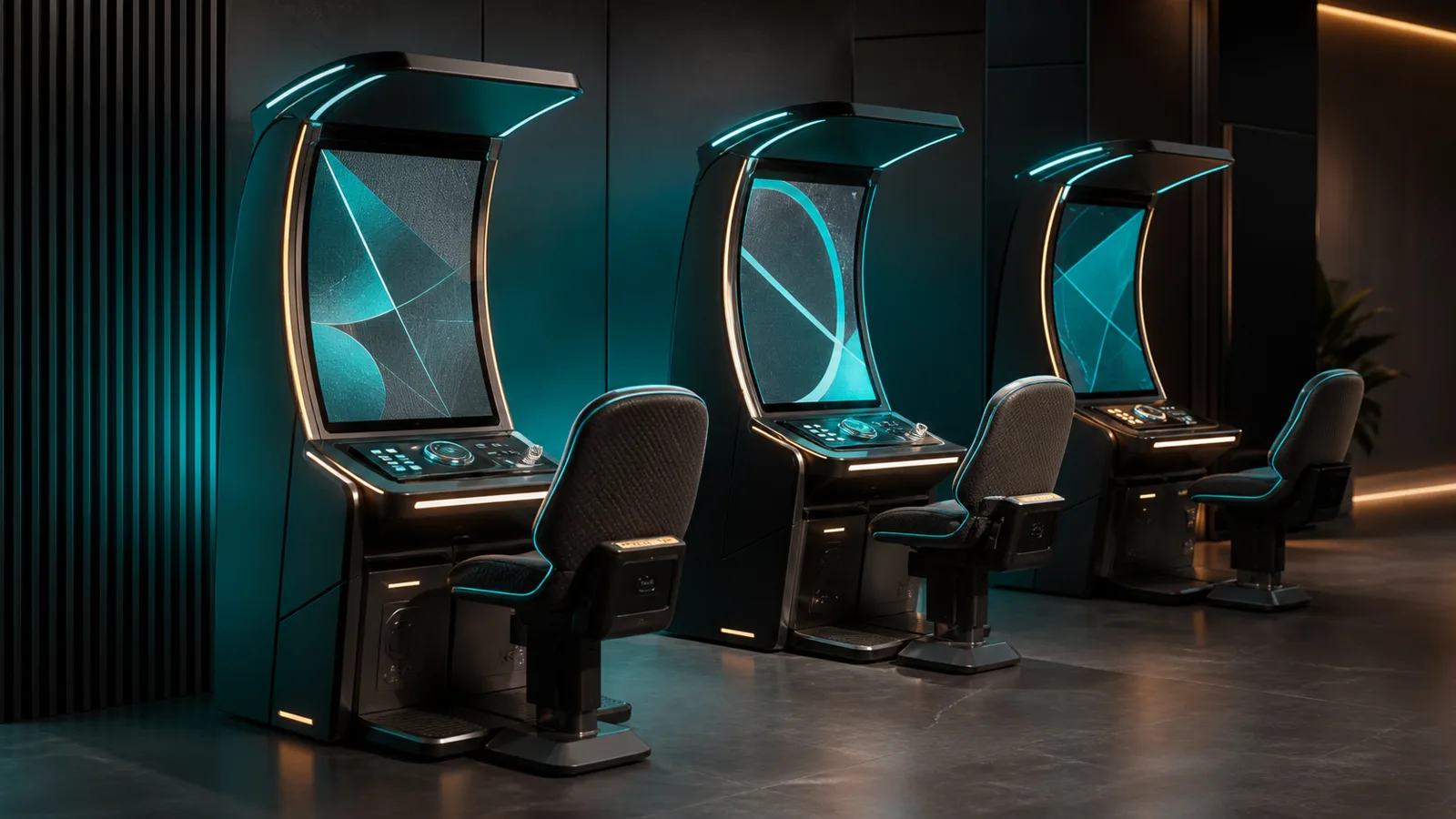
The modern gaming cabinet has a difficult job. It must establish a visible presence in a dense environment, remain comfortable for different adult users, protect certified components, manage heat and sound, accept future content and allow technicians to restore service quickly. These priorities frequently conflict. A dramatic silhouette can complicate sightlines; a larger display increases thermal load; a flush enclosure may slow access; an added feature can increase failure points.
That is why the most consequential cabinet work now happens before surface styling. Product teams are increasingly building around modular architecture, measured ergonomics and whole-of-life maintenance. The result may still look distinctive, but it is judged as a fleet asset rather than a one-off object.
Service time becomes a design metric
Every minute of diagnostic uncertainty extends downtime and brings tools, parts and people onto the floor. A serviceable cabinet uses clear access zones, replaceable modules, labelled harnesses, useful diagnostics and doors that can open safely within a realistic bank layout. Components likely to fail should not require removal of unrelated assemblies.
Design reviews should involve the people who maintain equipment, not only engineering and marketing. A technician can expose problems invisible in a CAD model: an awkward fastener, a connector hidden by a structural member, a screen too heavy for safe replacement or a filter that cannot be cleaned without moving the cabinet.
Thermal and acoustic control are connected
Higher-resolution displays and compact computing create heat. Moving that heat typically requires airflow, which creates noise and draws dust. A design that relies on high fan speeds can undermine the venue atmosphere and shorten component life if filters are neglected. Better thermal architecture uses efficient components, well-defined air paths, accessible filtration and enough margin for real-world ambient conditions.
Acoustic design extends beyond speakers. Cooling, buttons, payment hardware and enclosure vibration all contribute to the soundscape. Equipment should offer local clarity without forcing the surrounding bank to compete. Directional audio and disciplined level management can improve intelligibility while reducing aggregate noise.
Accessibility must shape geometry
Inclusive design is not a compliance plate added at the end. Reach distance, knee clearance, seat movement, viewing angle, type size, contrast, timeouts and audio options interact. A control can be technically reachable and still uncomfortable over a normal session. A screen can meet a contrast measure while presenting critical information too briefly.
Testing should include a range of bodies, movement capabilities, vision and hearing needs. It should also examine transitions: approaching the machine, moving a chair, locating help, changing settings and leaving safely. Accessibility is an operating experience, not a static dimension.
The cabinet of the future is not the one with the most surface area. It is the one that can evolve, be understood and remain supportable.
Modularity protects the refresh path
A cabinet may outlive several content and computing cycles. Modular display, compute, control and peripheral assemblies allow targeted refreshes, reduce inventory complexity and help venues avoid replacing useful structure. Standardisation also matters across a manufacturer’s range: common parts improve technician familiarity and spare coverage.
Modularity needs governance. A replaceable part must still preserve certification, security and configuration integrity. Hardware detection, signed software, tamper evidence and change records should make the authorised state clear after service.
Energy becomes visible in procurement
Small power differences scale across large estates and long operating hours. Energy evaluation should include active, idle and low-use states, screen brightness strategy, heat rejected into conditioned spaces and the server infrastructure required behind the cabinet. A lower device load can also reduce cooling demand.
- Compare energy at representative operating settings, not only a manufacturer-defined minimum.
- Ask how low-use modes affect availability, displays and regulated functions.
- Record component materials and recovery options for refurbishment and end of life.
- Include spare parts, travel and technician time in environmental assessment.
The new cabinet design cycle is therefore less about a single visual trend than a wider definition of quality. Form still matters. But a credible premium product also needs to be inclusive, observable, repairable and efficient over years of operation.