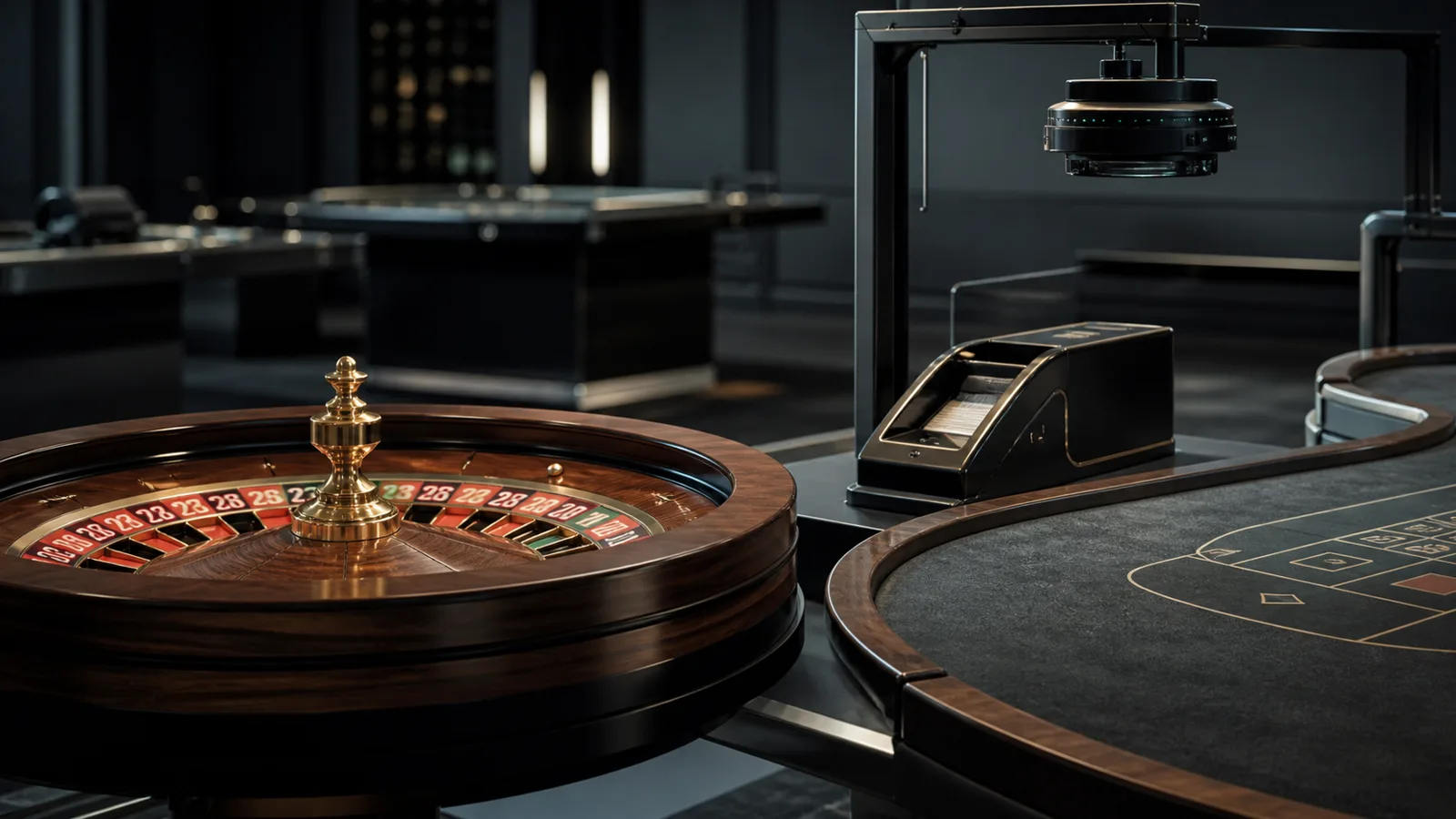
Casino tables present a distinctive technology challenge. The operating ritual is visible, social and highly dependent on trained staff. Equipment must add control without turning the interaction into a machine-led process. That is why many new systems are moving intelligence into the environment around the table: overhead optical sensors, instrumented shoes and wheels, connected chip trays and displays that support rather than dominate the work.
The promise is a more complete operating record. Inventory can be reconciled sooner, unusual patterns can be reviewed with better context, maintenance can be scheduled from actual use and supervisors can direct attention where it matters. The risk is false confidence. A sensed event is not automatically a correct interpretation, and a precise-looking dashboard can obscure gaps at the edge of view.
Start with the operating question
A useful system begins with a defined decision: what should a supervisor, dealer, security specialist or finance team be able to do better? Capturing every possible event creates storage and review burden without guaranteeing value. A clear purpose narrows the signal set, supports privacy minimisation and makes performance testable.
Reconciliation is one example. The goal may be to reduce the time between a physical count and an explainable variance. That requires a reliable table identifier, trusted device time, a view of transactions, a process for corrections and a final human owner. It does not necessarily require a permanent identity record for every person near the table.
Confidence needs to be visible
Optical systems encounter occlusion, lighting changes, reflective surfaces, rapid hand movement and objects that look similar from above. The interface should communicate when confidence is low and support comparison with other evidence. Forcing every uncertain event into a binary answer transfers machine ambiguity into the operating record.
Calibration is not a one-time installation task. Table layouts change, felt wears, lighting is adjusted and software models are updated. A controlled calibration process needs ownership, acceptance criteria and records. When performance falls below the threshold, the system should fail visibly into an understood manual process.
The dealer interface must remain calm
Dealers already manage procedure, pace, communication and customer behaviour. Poorly designed alerts compete with that work. The best table technology keeps dealer interactions minimal, places complex review with the right supervisory role and avoids requiring acknowledgement merely to silence the system.
Physical design matters as much as software. Sensor housings cannot obstruct sightlines or create awkward cleaning and maintenance. Cables and access panels should support fast service without compromising table integrity. Displays should remain readable to the intended audience without exposing operational information to everyone nearby.
The strongest table system is not the one that sees the most. It is the one that makes uncertainty explicit and sends the right decision to the right person.
Data joins previously separate teams
Table telemetry may be used by operations, finance, security, compliance, maintenance and analysts. Each group needs a different view and retention period. A common event model can prevent teams from creating conflicting versions of the same session, but access should still follow purpose and role.
Integration also creates cyber and continuity considerations. A table must have a safe operating condition if analytics or a network service is unavailable. Local certified functions should not depend unnecessarily on remote business systems. Segmentation and explicit data flows help preserve both availability and auditability.
How to evaluate a deployment
- Test normal, crowded, obstructed and degraded conditions—not only a clean demonstration table.
- Measure false alerts, missed events, review time and the proportion of alerts that change an operational decision.
- Include dealers and technicians in workflow and physical-design testing.
- Define how model or software updates are validated and how performance drift is detected.
- Keep an independent physical control where technology cannot provide sufficient assurance.
Table intelligence can create meaningful operational visibility, particularly where it shortens reconciliation and directs attention to exceptions. Its value will depend on restraint: capture what is needed, show uncertainty, preserve human expertise and ensure the system can explain its own limits.