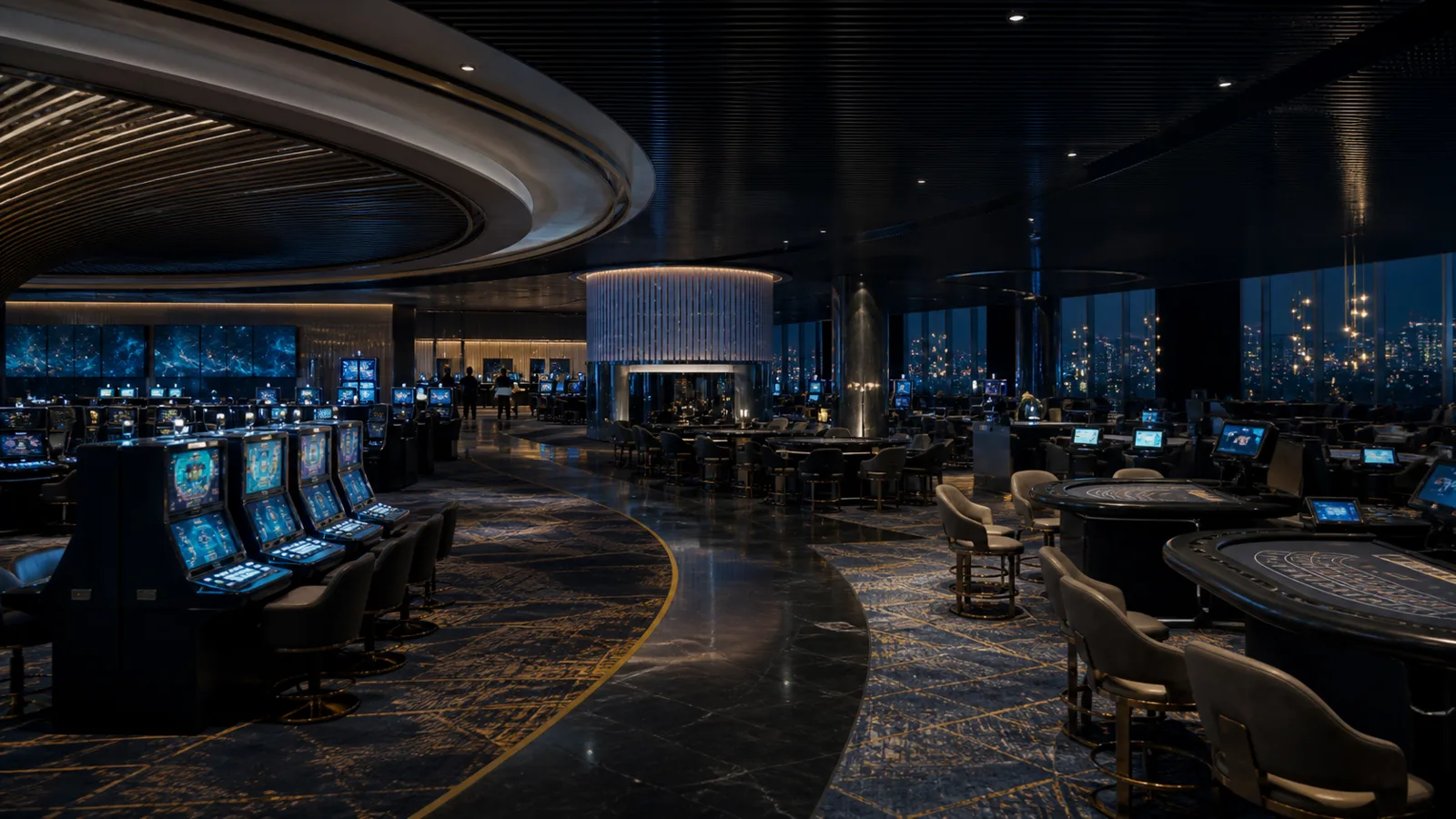
For most of its modern history, the casino floor has been managed as a collection of product categories. Electronic gaming machines formed one estate, tables another, surveillance a control function, loyalty a marketing system and facilities a separate building discipline. That model is becoming difficult to sustain. The operating questions that matter now—eligibility, service, energy, cyber resilience, customer protection and real-time awareness—cross those boundaries.
The result is an adaptive platform: not one monolithic technology, but an environment in which certified devices, people and services can exchange the minimum reliable information needed to respond to change. A machine can report a failing component before it goes out of service. A table alert can be reconciled with surveillance and inventory. A customer limit can be applied consistently across touchpoints. A facilities team can reduce load in inactive zones without affecting certified equipment.
Observability comes before intelligence
“Smart floor” language often begins with prediction. The more useful starting point is observability: can the organisation see the current state of critical assets and controls? That means consistent identifiers, trustworthy timestamps, defined health signals and an escalation route that operations can act on. A dashboard without agreed ownership only makes uncertainty more attractive.
Observability should cover failure as well as performance. Teams need to know when data is delayed, a device drops out, a rule does not apply or a supplier feed changes. Missing data is itself an operational event. The platform must distinguish “nothing happened” from “we stopped seeing it.”
Identity becomes a control plane
Account-based and carded systems can coordinate eligibility, loyalty, limits and exclusion, but identity should not be treated as an all-purpose data collection project. The design question is proportionality: which claim must be established, where must it persist, who can access it and how quickly can it be corrected?
Strong design separates verification from unnecessary disclosure. A device may need to know that an adult customer is authorised without receiving the full evidence behind that decision. Service teams may need a clear action without visibility into sensitive customer data. Architecture can reinforce purpose limitation instead of asking policy alone to contain access.
Service becomes part of the guest experience
Connected diagnostics can shorten outages, direct technicians and improve parts planning. The benefit is not only machine availability. It changes the atmosphere of the floor: fewer improvised closures, less intrusive maintenance and faster resolution when a customer needs help. But the service model must prevent the monitoring system from creating more alerts than teams can handle.
Good alert design includes severity, business context and the next expected action. A failing fan, payment exception and network anomaly should not enter the same undifferentiated queue. The system should show which controls are affected and what safe operating state applies while the issue is resolved.
Automation should reduce the distance between a signal and an accountable decision. It should not hide responsibility behind a score.
The architecture needs boundaries
Convergence does not mean every system talks directly to every other system. That creates brittle dependencies and a large attack surface. A resilient platform uses controlled interfaces, segmentation, clear data contracts and gateways that can enforce policy. Certified gaming functions should remain appropriately separated from business analytics and general venue technology.
- Define authoritative sources for identity, asset state, game configuration and incident records.
- Use stable device and location identifiers that survive physical moves and vendor changes.
- Separate real-time operational control from retrospective analytics.
- Design degraded modes so safe operation does not depend on every integration being available.
- Record automated decisions, overrides and configuration changes in a reviewable form.
Procurement moves from features to interfaces
A conventional request for proposal may ask whether a product has a feature. An adaptive-floor procurement asks how the feature is exposed, monitored, updated and withdrawn. It asks what data is available, under which licence, at what latency and in which failure state. It tests whether interfaces remain supported over the product life.
This shifts value toward vendors that document systems well, maintain compatibility and make service performance visible. It also requires operators to develop their own architectural judgment. “Open” is not a substitute for governance; an API is useful only when its semantics, security and lifecycle are controlled.
A platform measured by outcomes
The adaptive floor should not be justified by connectivity alone. Useful measures include mean time to restore service, energy per active device-hour, completeness of control coverage, rate of unresolved exceptions, intervention timeliness and change failure rate. These connect investment to operational and public-interest outcomes.
The long-term advantage is optionality. A venue with reliable boundaries and observability can adopt new equipment, comply with new standards and retire poor-performing components without reconstructing the entire environment. That is the platform idea at its most practical: technology that makes the next responsible change easier.