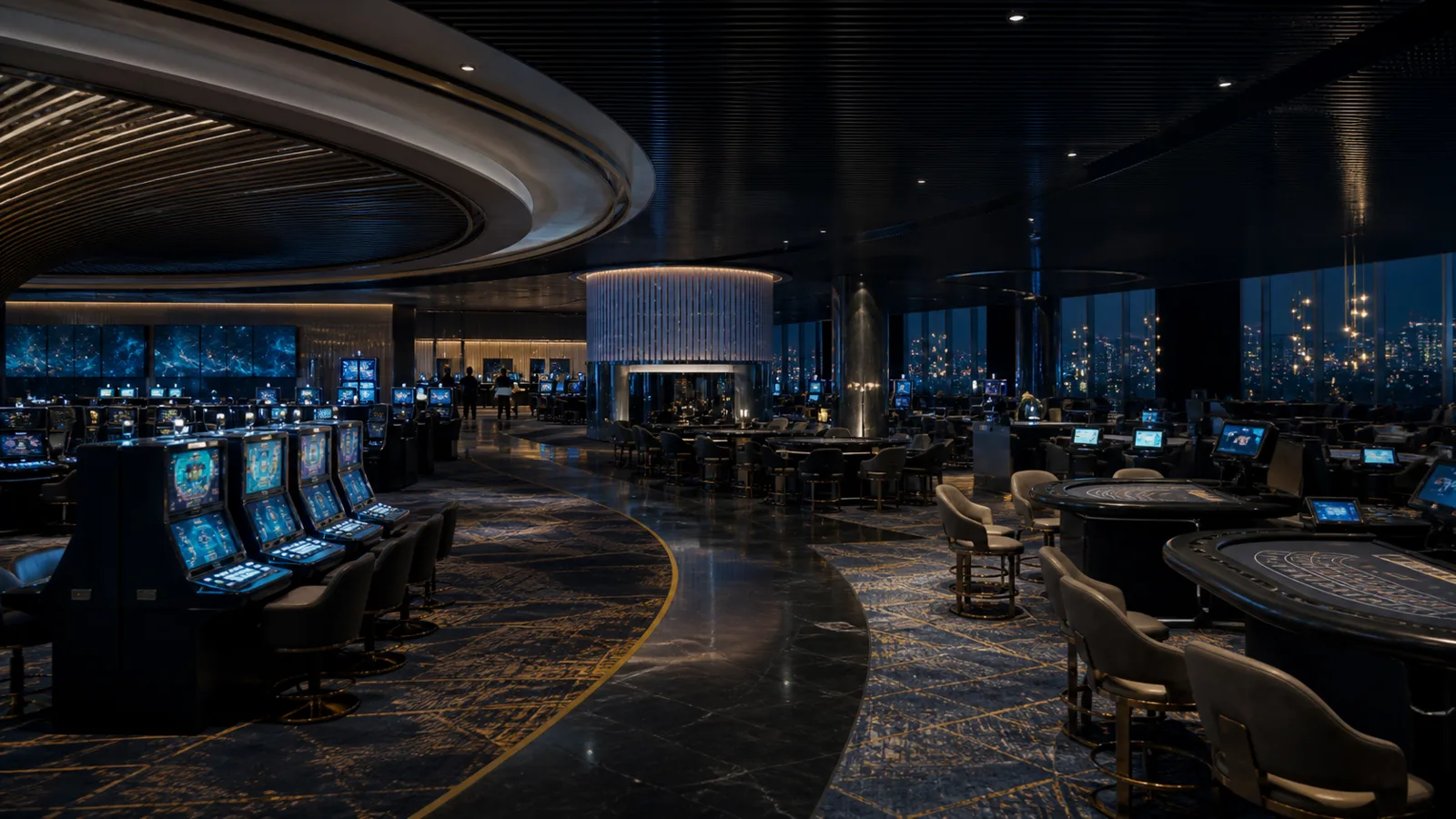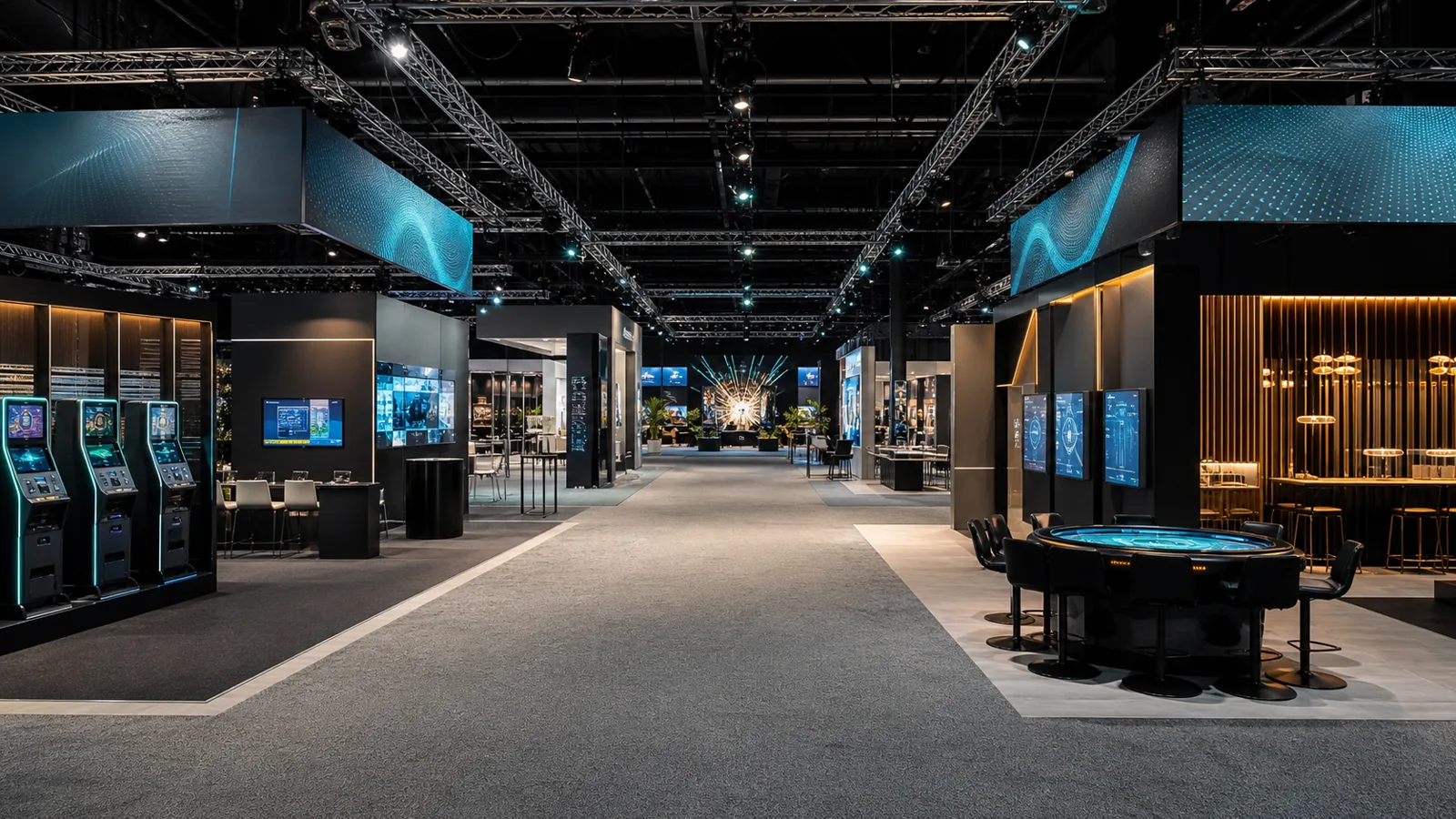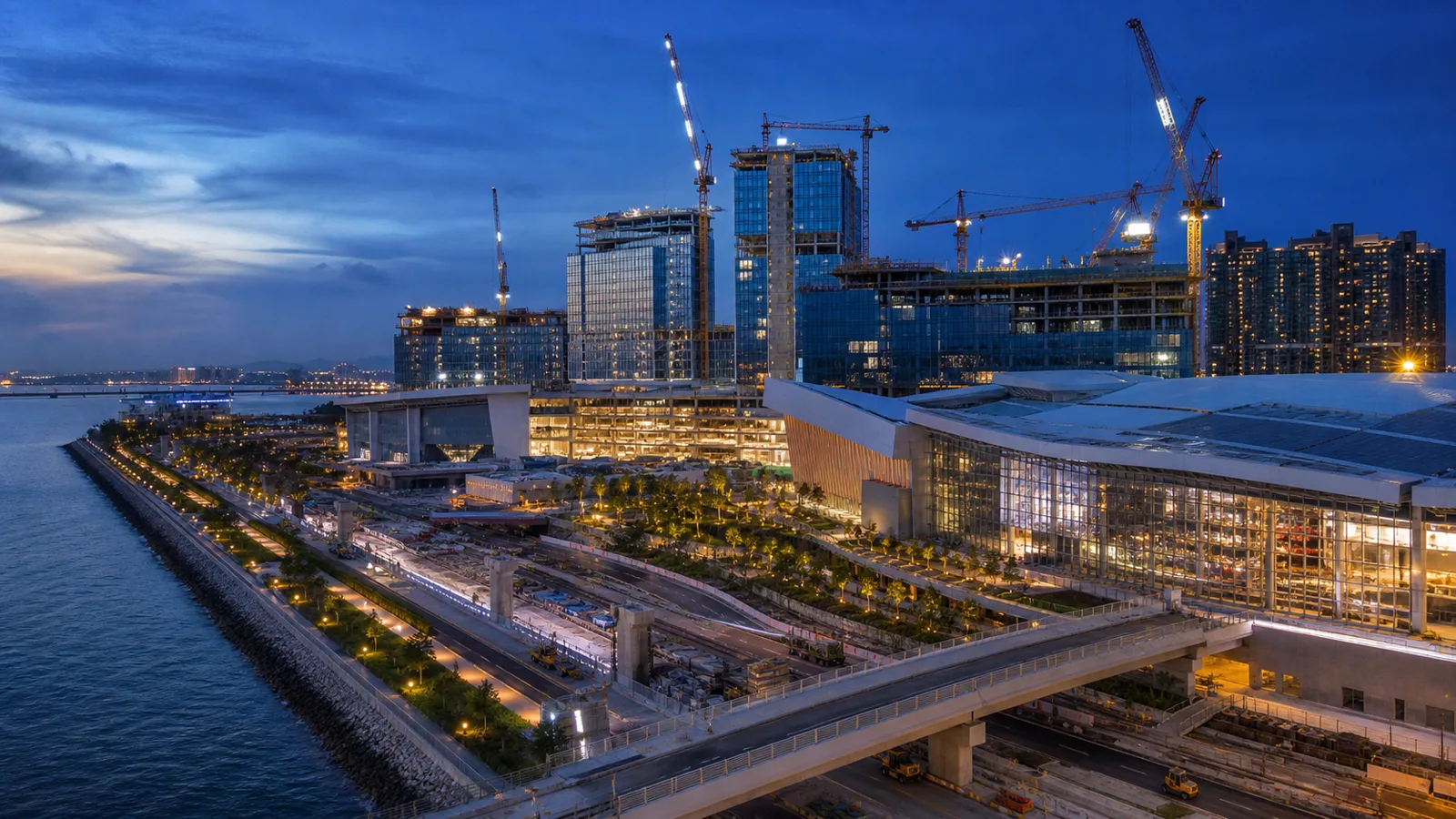
Osaka’s integrated resort has entered the phase in which progress becomes simultaneously more tangible and harder to summarise. Main works have started on Yumeshima, yet the public opening remains years away. Between those milestones sits the complicated middle: ground measures, structures, specialist facilities, public access, utilities, commissioning, recruitment and the construction of an operating culture capable of meeting Japan’s integrated-resort requirements.
Official Osaka materials describe a programme that began major construction in April 2025 and targets completion around summer 2030, with an opening objective around autumn 2030. The scheme brings the main resort buildings together with MICE facilities, hotels, a tourism centre, energy infrastructure, ferry functions and landscaped areas. Each component has its own contractors, interfaces and completion logic.
Ground conditions are strategic, not preliminary
Yumeshima’s site history makes ground improvement and environmental work part of the project’s strategic narrative. Liquefaction measures, removal of underground obstructions and soil-related work must be sequenced with construction and logistics. These activities receive less attention than hotel towers, but they influence schedule certainty, package access and the future resilience of the development.
For any waterfront mega-project, enabling works are also a governance test. Sponsors and public agencies must maintain a consistent understanding of risk, change and evidence across long timelines. Decisions made below ground can affect structural design, cost allowances and public confidence years later.
MICE changes the operating equation
The integrated-resort model is designed to serve more than gaming demand. International conference and exhibition facilities can generate large peaks in arrivals, food service, room demand, freight and security requirements. Their programme is therefore connected to transport operations, hotel readiness and the public realm. A convention opening cannot be treated as a separate event from the rest of the destination.
This mixed-use scale changes technology procurement too. Identity, ticketing, building management, workforce systems, logistics and cyber controls may cross organisational boundaries. If each facility is optimised as an island, the guest journey and operating data become fragmented. Integration must be designed early enough to be tested before live operations.
On a project of this scale, opening readiness is a systems-integration milestone—not simply practical completion of the buildings.
The five-year readiness runway
A 2030 target creates time, but it also creates exposure to change. Equipment generations will move, cyber threats will evolve and regulatory expectations will mature before installation. Procurement specifications need controlled flexibility: enough certainty for certification and delivery, with architecture that does not lock the resort to assumptions made years before opening.
- Construction packages need shared interface definitions for power, data, access, fire, security and maintenance.
- Technology roadmaps should distinguish long-life infrastructure from devices and software expected to refresh closer to opening.
- Operating procedures, training and test scenarios should develop alongside physical commissioning.
- Transport and crowd models should be validated against convention, entertainment and public-realm peaks—not only gaming attendance.
- Regulatory evidence should be captured as systems are built, avoiding a late reconstruction of design decisions.
Why the project matters outside Japan
Osaka is closely watched because it combines a new national market with a mature global integrated-resort model and a distinctive local delivery context. Suppliers will learn how product standards, documentation and support models translate into Japan. Cities elsewhere will study how infrastructure and tourism objectives are defined. Operators will observe how the resort balances international scale with local expectations.
For industry readers, the useful signal will not be a single percentage-complete figure. It will be how consistently the programme connects construction progress to operational readiness, public infrastructure and the commitments that justified approval. The years through 2030 will show whether the complex can be delivered as one destination rather than a collection of impressive components.